Plastic without borders
Arghya Protik Chowdhury [Source: New age, 09 August 2026]
THE discovery of microplastics in toothpaste and edible soya bean oil in Bangladesh has understandably unsettled the public. Headlines reporting that plastic fragments had been detected in everyday products sparked widespread concern and disbelief. Researchers at the Bangladesh University of Professionals found microplastics in every soya bean oil sample they examined while international studies have repeatedly documented their presence in various toothpaste formulations. The findings deserve serious attention, but they should not come as a surprise. They are neither isolated incidents nor startling anomalies. Rather, they are the predictable consequence of a world that has become saturated with plastic.
The real issue is not that microplastics have been found in products that we use every day. The real issue is that our environment has reached a point where such discoveries are becoming scientifically inevitable. Plastic pollution is no longer confined to overflowing landfills, polluted rivers or floating islands of waste in the oceans. It has infiltrated the air we breathe, the water we drink, the soil that produces our food and, increasingly, the products we consume without a second thought. The appearance of microplastics in toothpaste and cooking oil is another reminder that there is no meaningful boundary between environmental pollution and human health.
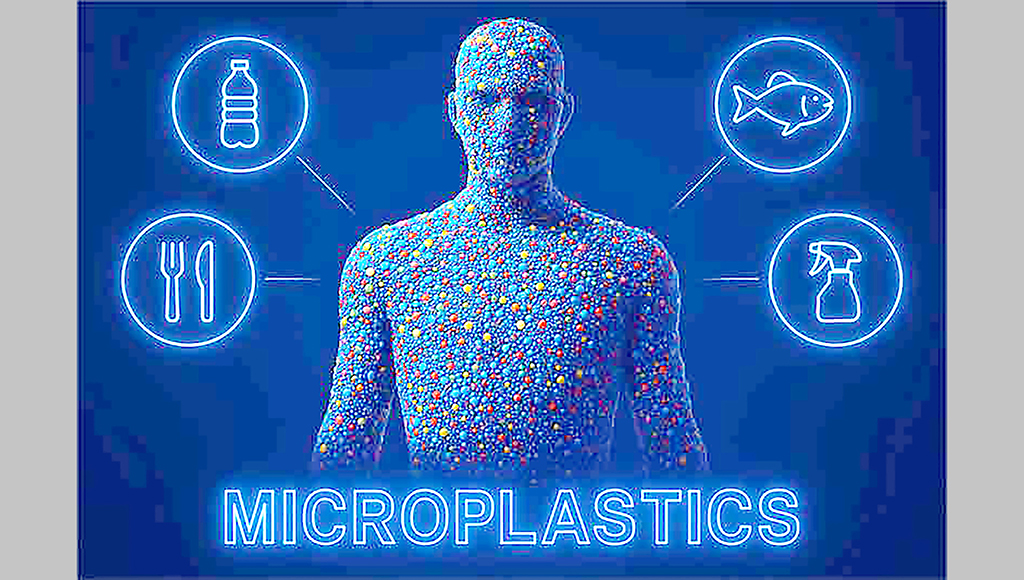
Microplastics are plastic particles measuring less than five millimetres in size. Some are deliberately manufactured for industrial and commercial uses, but most originate from the gradual breakdown of larger plastic products exposed to sunlight, heat, friction and weathering. Every discarded plastic bag, bottle, food wrapper, fishing net, synthetic garment or vehicle tyre slowly fragments into smaller pieces. These particles do not disappear. Instead, they continue breaking down until they become microscopic and invisible to the naked eye. Once released, they spread through rivers, agricultural soils, coastal ecosystems and even the atmosphere, creating a form of pollution that is exceptionally difficult to reverse.
Bangladesh is particularly vulnerable to this growing problem. Over the past two decades, plastic consumption has risen sharply alongside rapid urbanisation, economic growth and changing consumer habits, while waste management systems have struggled to keep pace. Large quantities of plastic waste enter drains, rivers, wetlands, farmland and eventually the Bay of Bengal. The country’s extensive river system also carries plastic pollution from upstream regions, making microplastic contamination a challenge that extends beyond national borders. In these circumstances, finding microplastics in food products is no longer extraordinary; it is precisely what environmental scientists would expect.
Understanding how these particles enter consumer products explains why contamination is becoming increasingly widespread. Toothpaste may contain microplastics through ingredients used to improve texture or abrasiveness, although many countries have restricted or banned such uses. Contamination can also occur during manufacturing, packaging and storage. Edible oils face similar risks throughout processing and distribution. Plastic containers, production equipment, transportation systems and packaging materials all provide opportunities for microscopic particles to enter the final product. The recent Bangladeshi study found that loose, unpackaged soya bean oil contained significantly higher levels of contamination than branded bottled products, suggesting that stricter quality control throughout the supply chain can reduce, though not eliminate, exposure.
Yet toothpaste and edible oil represent only a small part of a much larger problem. Scientific studies across the world have detected microplastics in drinking water, bottled water, seafood, sea salt, rice, fruits, vegetables, honey, milk, meat and numerous other food products. Environmental contamination has become so pervasive that exposure now occurs through multiple pathways every day. Even people who consciously avoid single-use plastics cannot completely escape contact with microscopic plastic particles because these contaminants have become embedded throughout modern ecosystems.
More concerning still is the growing body of evidence showing that microplastics are no longer confined to the external environment. Researchers have detected them in human blood, lungs, placentas, breast milk, semen, arteries and even brain tissue. These discoveries demonstrate that plastic particles can cross biological barriers and circulate throughout the human body. At the same time, it is important to distinguish established scientific findings from questions that remain under investigation. Detecting microplastics in human tissues does not automatically mean they directly cause every disease with which they are associated. Responsible science demands caution, particularly where the evidence continues to evolve.
Current research suggests that microplastics may contribute to inflammation, oxidative stress, hormonal disruption, immune dysfunction, changes to the gut microbiome, reproductive problems, cardiovascular disease and neurological disorders. Laboratory experiments and animal studies provide plausible biological explanations for these concerns, while recent clinical research has reported associations between microplastics in arterial plaques and an increased risk of heart attack, stroke and premature death. Even so, scientists are still investigating how long-term, low-level exposure affects human health, what levels of exposure may prove harmful and how different particle sizes and polymer types influence biological responses. The scientific consensus is therefore both reassuring and unsettling. We know microplastics are entering our bodies; what remains uncertain is the full extent of their long-term consequences.
This distinction matters because public discussion often swings between two equally unhelpful extremes. On one side lies sensationalism, where alarming headlines imply immediate catastrophic health effects unsupported by evidence. On the other lies complacency, where scientific uncertainty is treated as an excuse for inaction. Neither response serves the public interest. Fear undermines trust in science, while indifference allows pollution to worsen until solutions become even more difficult and costly. Scientific uncertainty should never be mistaken for scientific ignorance. History repeatedly shows that waiting for absolute certainty before addressing environmental risks often comes at enormous social, economic and public health costs.
Plastic pollution already imposes substantial environmental and economic costs through clogged drainage systems, urban flooding, declining fisheries, degraded ecosystems and rising waste management expenses. Microplastics add a more complex dimension because, unlike larger plastic waste, they are almost impossible to remove once they enter natural systems. They disperse through rivers, soils, sediments and food chains, making prevention far more effective than remediation.
The response must therefore extend well beyond isolated laboratory studies or periodic media attention. Bangladesh urgently needs national standards for monitoring microplastics in food, drinking water and consumer products. Investment in laboratory capacity should become a priority so contamination can be measured consistently across sectors. Environmental monitoring should be expanded to include rivers, agricultural land, coastal ecosystems and municipal water supplies, generating the data needed to guide policy and assess long-term trends.
Addressing the problem also requires confronting its source. Stronger waste collection systems, better recycling infrastructure and improved wastewater treatment can significantly reduce the release of plastic particles into the environment before they become impossible to recover. Equally important are policies based on extended producer responsibility, requiring manufacturers to take greater responsibility for the full life cycle of the plastics they produce. Such measures would encourage innovation in packaging, reduce unnecessary plastic use and support Bangladesh’s transition towards a more circular economy.
Industry, too, has a critical role. Manufacturers should eliminate unnecessary plastic ingredients from personal care products wherever feasible, strengthen quality control throughout food processing and packaging, and invest in safer alternatives that minimise contamination. Environmental responsibility is no longer simply a matter of corporate image. As consumers become increasingly aware of pollution and product safety, it is becoming central to public confidence and long-term business resilience.
Universities and research institutions must also expand Bangladesh-specific research instead of relying primarily on international findings. The country’s environmental conditions, dietary patterns, industrial practices and waste management systems differ considerably from those of many developed nations. Local evidence is therefore essential for designing effective regulations, identifying the greatest sources of exposure and developing appropriate public health strategies. Collaboration between environmental scientists, medical researchers, chemists, engineers, economists and policymakers will be indispensable in building a comprehensive understanding of the problem.
Consumers demanding greater transparency from manufacturers and stronger environmental accountability from regulators can change course with time. Public pressure has often been a catalyst for environmental reform, particularly where policy has been slow to respond. The media also bears an important responsibility. Reporting on microplastics should prioritise scientific accuracy over sensationalism. The objective should not be to frighten the public with alarming headlines but to explain a complex environmental issue in a way that encourages informed discussion and meaningful action. Awareness built on credible evidence fosters lasting engagement; fear fuelled by exaggeration rarely does.
Ultimately, the discovery of microplastics in toothpaste and soya bean oil is not the crisis itself. It is one visible symptom of a much larger environmental failure that has been unfolding for decades. Plastic pollution has become so deeply embedded in modern society that microscopic fragments now circulate through ecosystems, food chains and even the human body. That reality should not lead to despair, but it should reinforce the urgency of acting before contamination becomes even more pervasive.
Arghya Protik Chowdhury is a student of environmental science at Bangladesh University of Professionals.