COP31 & global climate compact
Manmohan [The Financial Express, Nov 13, 2026]
Three decades of climate summits have produced an extraordinary architecture of agreements, declarations, targets and financing commitments.Yet the distance between what governments promise and what societies experience remains troublingly wide. The world has become remarkably proficient at negotiating climate ambition, but far less effective at translating it into tangible results.
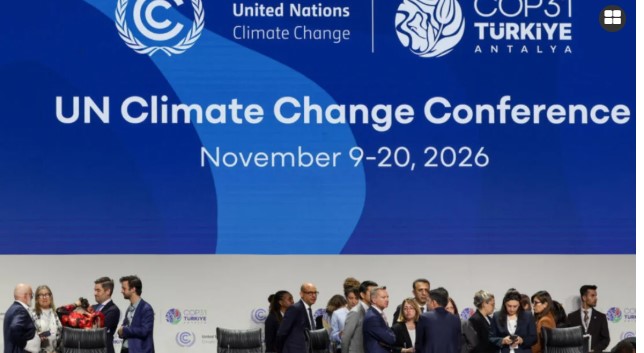
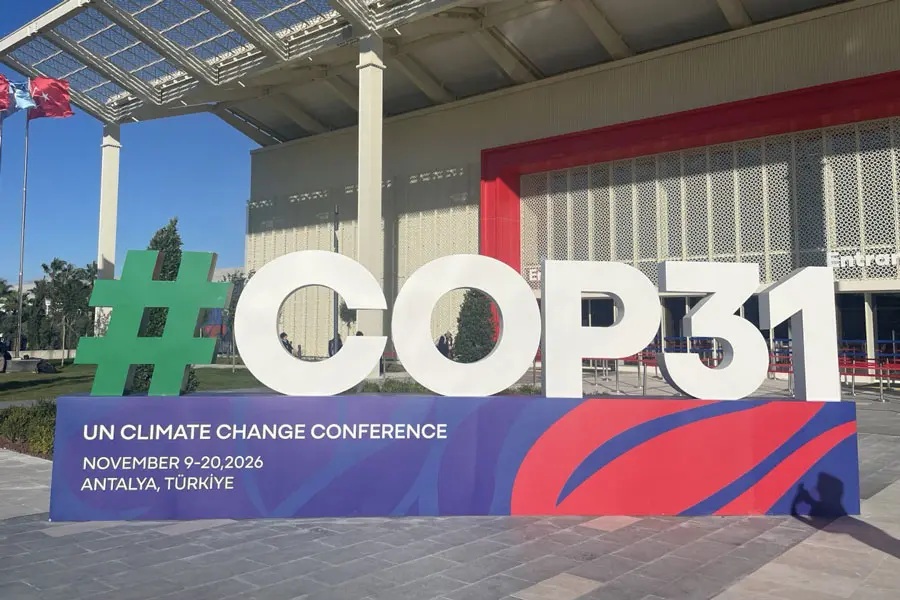
As delegates gather for COP31, the central question is no longer simply whether governments can agree on more ambitious targets. It is whether they can build the institutional, financial and operational capabilities needed to deliver on commitments already made. [Officially, COP31 stands for the 31st meeting of the Conference of the Parties (COP) to the UN Framework Convention on Climate Change (UNFCCC), a landmark international treaty agreed in 1992, and parent treaty to the 2015 Paris Agreement. COP31 is taking place in Antalya, Türkiye from 9 to 20 November 2026.]
Climate change does not respond to declarations. It responds to changes in the real economy: fossil-fuel dependence reduced, electricity grids modernised, forests protected, infrastructure made resilient and communities better prepared for extreme weather.
The next frontier of global climate action is therefore not another declaration. It is delivery.
The Paris Agreement was a diplomatic breakthrough. It established a common framework for national climate commitments and mechanisms for progressively increasing ambition. Since then, renewable energy technologies have advanced dramatically, clean-energy investment has expanded and climate considerations have entered mainstream economic policymaking.
Yet progress remains insufficient. The United Nations Environment Programme's 2026 Emissions Gap Report warns that existing policies could lead to approximately 2.8°C of warming within this century. Even full implementation of current national commitments would leave a substantial gap between ambition and the Paris temperature goals.
Meanwhile, climate impacts are intensifying. Extreme heat threatens productivity and public health. Floods destroy infrastructure and livelihoods. Droughts undermine food security. Melting glaciers create new risks for mountain communities and downstream populations.
The challenge is no longer confined to reducing future emissions. Countries must simultaneously transform their energy systems and protect their economies against climate disruptions already unfolding.
Both require something that international climate diplomacy has consistently underestimated: implementation capacity.
Consider what happens after a government announces an ambitious renewable energy target. Land must be secured, transmission networks expanded, regulations aligned, financing structured, environmental safeguards addressed, contracts awarded and projects constructed. Each stage requires specialised expertise, effective institutions and coordinated decisions.
A climate commitment may take minutes to announce. Delivering the investments behind it can take years.
Much of the international climate debate revolves around two questions: how ambitious should national commitments be, and how much finance should developed countries provide?Both are essential. But between commitments and financing lies a neglected institutional challenge: converting policy objectives into executable programmes.
Many developing countries have ambitious climate strategies but limited pipelines of investment-ready projects. Responsibilities are fragmented across ministries. Regulatory uncertainty discourages investors. Procurement processes can be prolonged or poorly structured. Public agencies lack specialised technical capacity. Financing arrangements are often negotiated before implementation risks have been adequately addressed.
The result is a paradox. Climate finance can remain underutilised even where investment needs are enormous. This is not simply a shortage of money. It is a shortage of systems capable of deploying money effectively.
Experience with large infrastructure and development programmes offers an important lesson: successful implementation depends less on individual announcements than on sustained institutional discipline. Clear responsibilities, credible project preparation, realistic schedules, transparent procurement, proactive risk management and continuous performance monitoring determine whether investments deliver their intended benefits.
Climate action needs the same discipline.
COP31 should therefore advance a Global Climate Implementation Compact: a practical agreement linking climate commitments to financing, institutional accountability, implementation milestones and independently verifiable outcomes.
The compact should not create another international bureaucracy or reopen the Paris Agreement. Instead, it should strengthen existing mechanisms through five mutually reinforcing commitments.
First, every participating country should develop a costed national climate implementation roadmap. Nationally Determined Contributions and National Adaptation Plans must be translated into prioritised investment programmes with clearly identified projects, financing requirements, responsible institutions and delivery schedules.
These roadmaps should integrate mitigation and adaptation with national development strategies, public investment programmes and fiscal planning. Climate action cannot remain an isolated responsibility of environment ministries.
Second, climate finance must be linked to credible investment pipelines. Multilateral development banks, development finance institutions and bilateral partners should work with governments to prepare projects before financing becomes the binding constraint.
This requires greater investment in feasibility studies, project structuring, guarantees, regulatory reform and risk-sharing instruments. Private capital will not flow merely because a project is labelled green. It follows credible revenue models, predictable regulation and manageable risks.
Third, implementation capacity must become a central climate priority. Project preparation, procurement, contract management, engineering standards and institutional coordination deserve the same attention as financing commitments.
Governments need dedicated climate delivery capabilities that can resolve bottlenecks across ministries and implementing agencies. International partners should support these capabilities over sustained periods rather than relying primarily on fragmented technical assistance.
Fourth, accountability must shift from announcements to outcomes. Climate progress should be measured not only by financing pledged or policies adopted, but by investments completed, emissions actually reduced, resilience strengthened and people protected.
Transparent public dashboards could track implementation milestones, disbursements, delays, costs and verified results. Independent assessments would strengthen credibility and allow successful approaches to be replicated.
Fifth, international cooperation must become more operational. Technology partnerships, regional electricity markets, resilient infrastructure corridors and cross-border disaster-warning systems require coordinated investment and implementation arrangements.
Climate risks do not respect national boundaries. Neither should the mechanisms designed to address them.
The compact's central purpose is to move from climate finance to climate performance. This requires a fundamental change in how international institutions assess success.
For too long, development finance has often been judged by commitments and approvals rather than completed investments and sustained outcomes. Climate finance risks reproducing this weakness on a much larger scale.
Mobilising a billion dollars is important. Ensuring that it produces functioning infrastructure, affordable clean energy or measurable protection against climate hazards is more important.
This distinction matters particularly for developing countries, where limited fiscal space makes implementation failures exceptionally costly.
The compact must also recognise differentiated responsibilities. Countries with limited institutional and financial capacity cannot be expected to deliver ambitious transitions without predictable international support. Equally, international assistance should strengthen domestic institutions rather than create permanent dependence on external consultants. The objective must be lasting national delivery capability.
COP31 is not starting from zero. COP30 launched the Global Implementation Accelerator and the Belém Mission to 1.5. The COP31 Presidency has introduced the Climate Implementation Bridge (BRIDGE) to connect national climate priorities with investment opportunities, financing partners and implementation capabilities.
These are encouraging developments. Indeed, the Climate Implementation Bridge already addresses several of the problems identified here, including project preparation, investment pipelines and institutional coordination.
The proposed compact would build on these initiatives by establishing a common discipline for country-level implementation: costed national roadmaps, defined responsibilities, financing partnerships, measurable milestones and transparent reporting through existing climate mechanisms.
Participating countries could publish initial roadmaps within twelve months, establish annual implementation reviews and use subsequent climate summits to assess delivery against agreed milestones. Multilateral development banks could align country programmes with these roadmaps and report jointly on financing and implementation progress.
The compact would not replace negotiations over emissions reductions, adaptation finance or climate justice. It would make existing commitments more credible by establishing how they will be implemented.
The ultimate test of climate diplomacy is not the number of agreements signed or the scale of promises announced. It is whether economies become less carbon-intensive, infrastructure more resilient and societies better protected.
COP31 offers an opportunity to shift the centre of gravity of international climate cooperation from negotiating intentions to delivering results.
The world does not need to abandon climate ambition. It needs to make ambition executable.
The legacy of COP31 should not be another declaration of urgency, but a compact for delivery. The climate will not judge our promises. It will reveal the consequences of our actions.
Manmohan Parkash is a former Senior Advisor in the Office of the President and former Deputy Director General for South Asia at the Asian Development Bank (ADB).