Bangladesh’s energy future
MM Shahidul Hassan Source : New age, 01 August 2026
RECENT articles and discussions in Bangladesh’s newspapers have highlighted renewable energy, particularly solar power, as an alternative to the country’s growing dependence on imported fossil fuels. This renewed attention is timely. Bangladesh’s energy crisis is no longer simply a problem of inadequate electricity generation; it has become a structural threat to macroeconomic stability. The country’s dependence on imported LNG, reflected in an import bill of Tk 54,954 crore in fiscal year 2024–25, has exposed the economy to foreign exchange pressures and volatile global energy markets.
This vulnerability is increasingly evident. Average daily gas supply has fallen to around 2,526 million cubic feet (mmcfd), far below the estimated 3,800 mmcfd needed for stable power generation and industrial production. In 2026, disruptions in global energy markets and rising LNG prices have added further pressure on foreign exchange reserves, public finances and energy subsidies.
This is not merely an energy-sector problem; it is a question of economic resilience and national energy security. Bangladesh must therefore reduce its dependence on imported fossil fuels and accelerate the transition to a more diversified energy mix, with renewable energy playing a much larger role. Given its high population density and limited land, the country cannot simply copy models based on vast areas of unused land. It needs solutions suited to its own geography: rooftop and floating solar, solar irrigation and the productive use of public, industrial and other suitable spaces.
A well-planned renewable-energy transition can reduce fuel imports, ease pressure on foreign exchange reserves, strengthen energy security and support sustainable economic development.
Renewable energy remains marginal
BANGLADESH has made progress in renewable energy, particularly solar power, but its contribution remains small. As of July 2026, solar accounted for about 797 MW of installed capacity, compared with more than 12,400 MW from gas, 8,400 MW from coal and 5,600 MW from heavy fuel oil. Wind and hydropower contributed 62 MW and 230 MW, respectively. The World Bank estimates that renewables supply only about 1.5 per cent of electricity fed into the national grid, despite the recent addition of 338 MW of clean electricity.
The contrast is striking: Bangladesh has achieved near-universal electricity access, yet its power system remains overwhelmingly dependent on fossil fuels. The next challenge is therefore to ensure not only access, but also reliable, affordable and secure energy.
Solving the land dilemma through intelligent spatial planning
WITH agricultural land shrinking, converting productive farmland into solar farms is not sustainable. Food security is as important as energy security. The question should therefore shift from ‘where can we acquire land for solar farms?’ to ‘where can we install solar power without consuming productive farmland?’ Bangladesh needs a decentralised, multi-layered renewable-energy strategy suited to its geography.
Rooftops should become power plants: Rooftop solar should be Bangladesh’s first priority because it generates electricity without competing with agriculture for land. Millions of square metres of rooftop space on factories, warehouses, commercial buildings and public institutions remain largely untapped. Industrial rooftops are particularly suitable because electricity demand is high during daylight hours, when solar generation peaks. SREDA’s net-metering programme provides a framework for expansion, but its scale remains modest, with 1,941 registered systems and a combined capacity of about 84.6 MWp.
Bangladesh should make rooftop solar central to its industrial and energy policies. Large factories, economic zones and commercial buildings should be encouraged — and, where appropriate, required — to install solar systems. Net metering should be simplified and strengthened to enable consumers to use their own solar power and feed surplus electricity into the grid. The priority should now be to move from individual installations to mass adoption, incorporating rooftop solar into new industrial zones and large commercial complexes.
Solar irrigation can serve two purposes: Agriculture itself can become part of the renewable-energy transition. Bangladesh has thousands of irrigation pumps, many of which depend on diesel or grid electricity. Solar-powered irrigation can reduce diesel consumption and protect farmers from fuel-price fluctuations. SREDA reports that more than 2,300 solar irrigation pumps have already been installed.
Where technically feasible, integrating these systems with the national grid could provide an additional benefit: surplus daytime electricity could be fed into the grid when irrigation demand is low. This would allow solar irrigation to contribute to the wider energy system without displacing agricultural land.
Floating solar offers another opportunity: Bangladesh’s rivers, canals, reservoirs, ponds and other water bodies also offer opportunities for floating solar. Suitable artificial reservoirs, ponds and designated water bodies could generate clean electricity without consuming valuable land.
This opportunity must, however, be approached carefully. Water bodies support fisheries, navigation, irrigation and biodiversity. Renewable-energy projects should avoid ecologically sensitive areas and locations that are essential to local livelihoods.
Renewable energy as an industrial strategy
THE transition to renewable energy should not be treated as an environmental policy alone. It should become part of Bangladesh’s industrial strategy.
Energy-intensive industries need reliable and affordable electricity, while international buyers are increasingly concerned about the carbon footprint of global supply chains. Renewable energy can therefore improve both energy security and export competitiveness.
For Bangladesh’s garment and other export-oriented industries, rooftop solar and energy-efficient production can reduce operating costs and strengthen their position in global markets that are increasingly shaped by environmental and carbon-related standards.
Solar alone is not enough
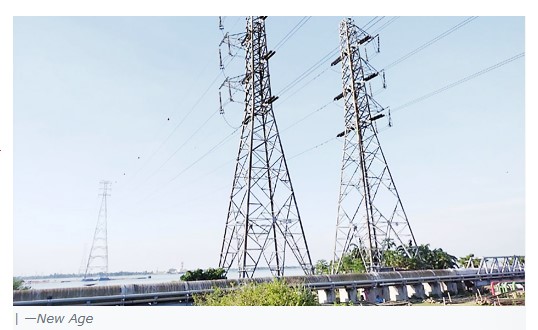
BANGLADESH should not expect solar energy alone to solve its energy crisis. Solar generation declines after sunset and varies with weather conditions. A larger renewable energy system will therefore require battery storage, a modern electricity grid, improved transmission and distribution networks and better demand management.
Bangladesh should also explore carefully selected wind projects, sustainable biomass and biogas and appropriate waste-to-energy solutions. Regional electricity trade can complement domestic renewable generation and provide greater flexibility when renewable output is low.
Energy efficiency must also become a national priority. More efficient factories, buildings, appliances, cooling systems and industrial equipment can reduce electricity demand and the need for additional generation capacity.
A new energy strategy
BANGLADESH should not attempt to eliminate fossil fuels overnight, but it must steadily reduce its dependence on imported fuels while expanding domestic renewable energy and improving efficiency. Its strategy should prioritise rooftop solar over farmland, renewable projects on suitable non-agricultural land, solar irrigation and floating solar where appropriate, and modern grids and energy storage to integrate variable renewable power. Energy efficiency must also become a national priority.
As a densely populated, land-constrained country, Bangladesh cannot simply copy renewable energy models based on vast areas of unused land. It needs a strategy suited to its own geography: rooftops before farmland, water bodies where appropriate, and technology and efficiency to maximise every unit of energy. The challenge is no longer whether Bangladesh should expand renewable energy, but whether it can move quickly and intelligently enough to make it a meaningful pillar of national energy security and economic resilience.
MM Shahidul Hassan, former professor at Bangladesh University of Engineering and Technology, is distinguished professor at Eastern University.