HUMAN RIGHTS DAY : Reaffirming rights and dignity
Musharraf Tansen [Source: New age, 10 December 2025]
HUMAN Rights Day, observed every year on December 10, commemorates the adoption of the Universal Declaration of Human Rights (UDHR) in 1948 — a landmark document that articulated, for the first time in human history, the universal and inalienable rights that belong to every human being. Human Rights Day 2025 carries the theme ‘Human rights: our everyday essentials’, a theme that signals a significant shift in how we understand rights. Instead of treating them as lofty principles reserved for international treaties, it insists that rights shape the most ordinary aspects of our lives. The right to speak freely, the right to safety, the right to education, the right to justice, and the right to dignity are not occasional privileges; they are the essential conditions for human flourishing.
For Bangladesh, a nation whose history is rooted in struggles for linguistic, cultural, and political freedom, this year’s theme resonates deeply — but it also raises urgent questions about the state of rights today.
Bangladesh has achieved remarkable progress over the past fifty years. Poverty has sharply declined, life expectancy has risen, girls’ education has improved, and the country has become an important global actor in climate diplomacy and peacekeeping. These achievements deserve recognition. Yet, beneath this progress lies a growing unease. Reports from civil society, journalists, international human-rights researchers, and domestic advocacy groups indicate that a number of fundamental rights — the very rights enshrined in the UDHR — are increasingly under pressure. Human Rights Day, therefore, is not only a moment of celebration; it is also a moment of deep reflection. It challenges Bangladesh to confront the contradictions between its constitutional ideals and the lived experiences of many of its citizens.
Why this year’s theme is deeply relevant for Bangladesh
THE 2025 theme emphasises that human rights are ‘positive, essential, and attainable’. This framing is highly relevant for Bangladesh, where human-rights debates are often presented as political confrontations rather than everyday necessities. When rights are viewed only through a political lens, discussions become polarised. However, when rights are understood as basic conditions for life — the right to speak without fear, to seek justice without obstruction, to worship freely, to access education, to live without violence — it becomes clearer that protecting rights is in everyone’s interest. Universality is not merely a philosophical principle; it is a practical foundation for a stable and prosperous society.
The theme also reminds us that rights are intertwined. The right to free expression cannot be separated from the right to justice, just as the right to education is linked to the right to safety and equality. When one right is weakened, others naturally erode. If journalists or activists fear reprisals, allegations of violence or corruption go unreported. If minority communities are attacked without accountability, the fundamental promise of equal citizenship collapses. If women and girls cannot walk freely or seek justice, the country’s development narrative becomes hollow. And if law-enforcement agencies act without oversight, legal protections become symbolic rather than real. Human Rights Day 2025 compels Bangladesh to recognise these connections and address rights not as isolated issues, but as interdependent pillars of a functioning democracy.Travel guide book
Human-rights landscape in Bangladesh
OVER the past two decades, human-rights organisations have documented a troubling rise in violations across several domains. Reports of extrajudicial killings, custodial torture, enforced disappearances, mass arrests, and politically motivated charges continue to raise concerns. Journalists face harassment, intimidation, and legal threats under cybersecurity and digital laws, leading to widespread self-censorship. The media environment, once vibrant and diverse, now operates under increasing pressure, weakening the country’s democratic fabric.
The situation of minority communities remains particularly fragile. Between 2024 and 2025, multiple incidents of targeted violence against religious and ethnic minorities were recorded, including the destruction of mazars, assaults on individuals, and harassment of minority-owned businesses. These are not isolated incidents. They signal deeper social tensions and reinforce fears that communal extremism is becoming normalised. Bangladesh, a nation whose liberation struggle was built on secular and pluralistic principles, must reflect seriously on what such violence means for its identity and future.
Gender-based violence remains an acute and persistent crisis. Women and girls continue to face harassment, assault, trafficking, and social stigma when seeking justice. While legal frameworks exist, enforcement remains inconsistent, and victims often navigate systems that are intimidating, under-resourced, and vulnerable to political influence. The gap between policy and practice remains wide. A lack of sufficient shelters, psychological support, and long-term reintegration options leaves many survivors without meaningful protection.
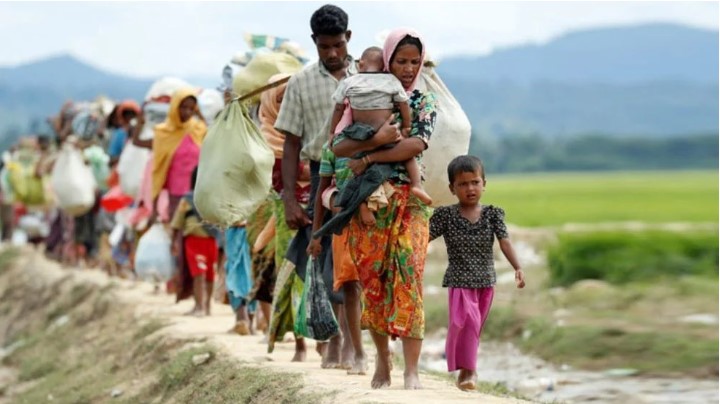
The Rohingya population, hosted in Bangladesh out of humanitarian necessity, continues to face immense hardship. Movement restrictions, limited educational opportunities, and growing insecurity in the camps threaten the basic rights and dignity of more than a million refugees. As global attention fluctuates, Bangladesh carries a disproportionate burden with insufficient international support.
These challenges, taken together, make Human Rights Day 2025 not just symbolic but urgently relevant. The theme ‘everyday essentials’ reminds us that rights violations are not abstract; they profoundly shape people’s daily lives — from a journalist deciding whether to publish an article, to a minority family fearing to celebrate a religious festival, to a woman hesitating to report abuse, to a refugee child being denied schooling.
What Bangladesh must confront and change
IF THIS Human Rights Day is to mark a turning point, Bangladesh must reaffirm its commitment to rights in concrete and systemic ways.
Strengthening press freedom must be a priority. A democratic society cannot function when information is controlled, filtered, or suppressed. Journalists must be allowed to investigate corruption, violence, and injustices without fear. Laws that criminalise dissent or enable surveillance without due process should be reviewed and reformed so that citizens can speak openly and critique their government in good faith.
Justice and accountability must also be non-negotiable. Extrajudicial killings, enforced disappearances, and torture require transparent, independent investigations. Impunity — perceived or real — erodes public trust in institutions. Strengthening judicial independence, enhancing oversight of law-enforcement agencies, and protecting witnesses are essential steps towards restoring confidence in the rule of law.
Bangladesh must also reaffirm its commitment to minority rights. Safety and equal citizenship for all communities — Hindu, Buddhist, Christian, Ahmadiyya, Shia, indigenous, and other marginalised groups — is not merely a constitutional promise; it is a moral responsibility. Preventing communal violence means investing in community policing, monitoring hate speech, responding swiftly to threats, and prosecuting perpetrators without political interference.
Gender equality must be pursued with renewed urgency. Legal reforms alone are insufficient. Social norms must shift. Schools must teach gender equity. Media campaigns must challenge harmful stereotypes. Law-enforcement agencies must receive gender-sensitive training. Survivors must have access to shelters, health services, legal aid, and psychological support. Gender justice must become a public priority, not an afterthought.
Strengthening national institutions is equally vital. Human-rights commissions, ombuds institutions, watchdog bodies, and oversight committees must operate independently, free from political pressure. Parliament must encourage genuine debate, not suppress dissenting voices. Civil-society organisations must be empowered to play a watchdog role, rather than be viewed as adversaries.
Shared responsibilities
Human-rights protection is not the responsibility of governments alone. Civil-society groups — legal aid organisations, journalists, women’s rights networks, minority rights activists, student groups, academic institutions, digital rights advocates, and humanitarian organisations — form the backbone of accountability. Their role is to document violations, support victims, raise awareness, and push for reforms. Their ability to operate freely is essential for democracy.
Young people, in particular, hold immense transformative potential. Today’s young Bangladeshis are more connected, more educated, and more globally aware than any generation before them. They are already speaking up on issues such as climate justice, digital privacy, gender equality, student rights, and safe cities. Harnessing this energy requires creating spaces for youth participation in policymaking, civic education, creative activism, and community development.
The international community also has a responsibility. Bangladesh has long been a leader in global humanitarianism — from sheltering the Rohingya to championing climate justice. In return, global partners must support the country in strengthening rule-of-law systems, training human-rights defenders, supporting independent media, and encouraging legal and institutional reforms. Constructive engagement — rather than politicised pressure — is essential for lasting change.
Imagining a Bangladesh grounded in rights, dignity and justice
AS THE nation observes Human Rights Day 2025, it is worth imagining what Bangladesh could look like if rights were truly treated as ‘everyday essentials’. Imagine a country where journalists and activists work freely. Imagine a society where minority families feel fully safe and included. Imagine villages and cities where girls and women live without fear of harassment. Imagine institutions that uphold justice consistently, regardless of political affiliation. Imagine an education system that equips young people with the values of tolerance, pluralism, and critical thinking. Imagine a political culture where disagreement is not silenced but valued. Imagine a Bangladesh where every citizen — regardless of class, gender, ethnicity, religion, or occupation — feels visible, protected, and respected.
This vision is not impossible. Bangladesh has repeatedly demonstrated the resilience, creativity, and moral courage needed to rise from crises — from war to famine, from cyclones to pandemics. Its civil society is vibrant. Its youth are determined. Its cultural heritage is inclusive and humane. Its constitution provides a strong foundation for rights. What is needed now is collective+ resolve.
Human Rights Day 2025 is not merely a date on the calendar. It is a reminder of Bangladesh’s founding values — justice, dignity, pluralism, and equality. It is a call to action for institutions and individuals alike. It is a moment to reaffirm that rights are not privileges granted selectively; they are the birthright of every human being. And it is an invitation to imagine a Bangladesh where the promise of the UDHR is not only written in documents, but lived in the everyday experiences of its people.
Musharraf Tansen is a development analyst and former country representative of the Malala Fund.