Foreign policy challenges for new government
HM Nazmul Alam [Source : NEWAGE, 20 February, 2026]
WHEN the Bangladesh Nationalist Party unveiled its manifesto anchored in the phrase ‘Bangladesh First,’ it offered more than an electoral slogan. It presented a moral claim. That sovereignty, dignity and national interest would no longer be rhetorical ornaments but guiding principles. That Bangladesh would have friends abroad but no masters. That foreign policy would be self-respecting, active and grounded in equality and mutual respect.
Yet slogans do not operate in a vacuum. They enter history at a specific moment. And the moment into which a newly elected BNP government would step is not forgiving. It is shaped by an interim administration’s far-reaching trade and strategic commitments, by intensifying rivalry among global powers and by a region increasingly defined by suspicion, militarisation and economic fragmentation.
The first and most immediate shadow over the new government will be the controversial trade agreement signed on February 9 between the interim administration and the United States. It was presented as a pragmatic adjustment to reciprocal tariffs. But the fine print reveals a far more comprehensive restructuring of Bangladesh’s trade, regulatory, subsidy, security and even geopolitical posture.
A reduction of reciprocal tariffs from 20 per cent to 19 per cent, layered over existing general tariff rates, leaves Bangladeshi exports facing a combined burden of 34.5 per cent in the US market. In exchange, Bangladesh has committed to sweeping tariff concessions for thousands of American products, gradual elimination of duties on many more, removal of regulatory barriers, recognition of US standards in agriculture and pharmaceuticals, large-scale purchase obligations including aircraft, LNG, wheat and soybeans, expanded access for US investors in strategic sectors, restrictions on subsidies to domestic enterprises and alignment with US export control and national security frameworks.
If this agreement stands unaltered, it will test the very meaning of ‘Bangladesh First.’
The BNP government will have to decide whether sovereignty is a negotiable instrument or a constitutional principle. Cancelling or renegotiating such an agreement would risk diplomatic friction with Washington. Accepting it wholesale would invite domestic criticism and constrain policy flexibility for years, perhaps decades. The challenge will not be rhetorical but procedural. How to revisit the agreement through parliament, restore transparency and renegotiate terms without triggering retaliatory tariffs or strategic estrangement.
This dilemma is only one dimension of a far larger balancing act.
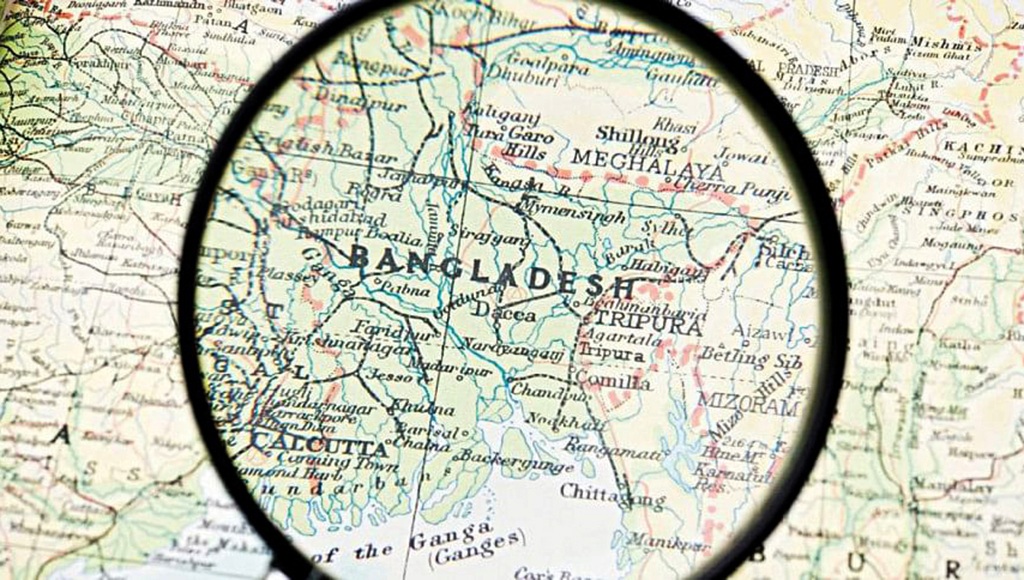
Bangladesh sits at the confluence of three great power arcs. The United States views the Indo-Pacific as a theatre of strategic competition. China sees the Bay of Bengal as a gateway within its Belt and Road vision. India regards Bangladesh not merely as a neighbour but as an extension of its security and connectivity architecture. Each power brings investment, trade, security cooperation and diplomatic leverage. Each also carries expectations.
The manifesto’s promise of non-interference and resistance to foreign interference is noble. But the real test will lie in how Dhaka navigates expectations when they collide.
Consider the United States. Washington’s interest in Bangladesh is no longer limited to garments or remittances. It extends to digital infrastructure, port security, energy routes, defence procurement, export controls and technology standards. The new trade framework suggests a desire to integrate Bangladesh more tightly into the American economic and security ecosystem. Compliance with US export bans and complementary restrictive measures in the name of national security could limit Bangladesh’s freedom to maintain neutrality in conflicts between major powers. The BNP government will have to determine how far it is willing to align without surrendering strategic autonomy.
Now consider China. Beijing remains one of Bangladesh’s largest trading partners and a major source of infrastructure financing. Chinese firms have played central roles in bridges, power plants and industrial zones. Yet any deepening of strategic cooperation with China may trigger American scrutiny, particularly if clauses restricting agreements with so-called non-market economies are enforced. If Bangladesh signs a preferential trade arrangement or digital framework that Washington interprets as undermining US interests, it could face punitive consequences under the existing agreement.
Then there is India, whose relationship with Bangladesh is both intimate and fraught. Water sharing of the Teesta and other transboundary rivers remains unresolved. Border killings and push-ins continue to inflame public opinion. At the same time, India is Bangladesh’s largest neighbour, a crucial transit partner and an unavoidable geopolitical constant. The BNP government has pledged equality and mutual respect in relations with neighbours. Translating that into concrete outcomes on water, trade asymmetry, border management and connectivity will require diplomatic agility and political courage.
Balancing America, China and India will not be a matter of polite communiqués. It will require a coherent doctrine.
The manifesto speaks of strengthening economic diplomacy, diversifying exports, attracting foreign direct investment and expanding trade with South America and Africa. These are necessary ambitions. Bangladesh’s graduation from least developed country status will gradually erode preferential trade benefits. Export diversification beyond garments is imperative. But diversification cannot coexist with structural dependence. If tariff concessions and subsidy restrictions weaken domestic industries before they mature, the country may find itself importing more while exporting less.
The promise to deepen ties with the Muslim world and build strategic partnerships with Gulf Cooperation Council states reflects historical continuity. Gulf capital combined with Bangladeshi labour and productivity could generate new forms of economic integration. Yet even here, geopolitical crosscurrents are strong. The Gulf is itself navigating complex alignments among Washington, Beijing and regional rivalries. Bangladesh will need to avoid becoming a peripheral theatre for others’ contests.
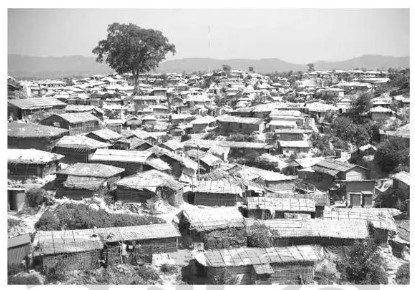
The Rohingya crisis adds another layer of complexity. The manifesto emphasises safe, voluntary and dignified repatriation with full citizenship rights. Past episodes of repatriation in 1978 and 1992 are invoked as precedents. But today’s Myanmar is different. Its internal conflict is deeper, its military regime more entrenched, its international isolation more severe. Effective repatriation will require coordination not only with Naypyidaw but with Beijing, Delhi, Washington and ASEAN actors. Any perception that Bangladesh is tilting too far towards one power could complicate collective diplomatic pressure on Myanmar.
Soft power diplomacy, cultural exchanges, sports and educational networks are promising tools. They cultivate long-term influence beyond transactional deals. Yet soft power cannot compensate for structural vulnerabilities in trade and security.
The institutional capacity of the ministry of foreign affairs will therefore be critical. Expanded recruitment, professional training and enhanced mission capacity are welcome commitments. But capacity is not merely administrative. It is intellectual. Diplomats must be equipped to read evolving trade law, digital governance norms, climate finance mechanisms and defence technologies. They must anticipate how a clause in a trade agreement can cascade into strategic dependence.
The appointment of Dr Khalilur Rahman as foreign minister illustrates the complexity of the moment. Once criticised as a representative of foreign influence during his tenure in the previous administration, he now occupies one of the most sensitive portfolios in the BNP government. His experience in international organisations and security policy may be assets in navigating the intricate web of commitments and expectations. Yet his appointment also symbolises political convenience, perhaps even compromise. It reminds us that foreign policy is often shaped less by ideological purity than by strategic necessity.
The proverb that there are no permanent friends or enemies in politics acquires sharper meaning in the realm of diplomacy. The BNP government will need to demonstrate that flexibility does not equal surrender and that engagement does not equal subordination.
‘Bangladesh First’ must therefore evolve from a declaration into a disciplined practice. It must mean that trade agreements are transparent and debated in parliament, strategic partnerships are diversified rather than monopolised, water sharing and border issues are pursued firmly but without theatrics, energy purchases are based on price and efficiency, not geopolitical compulsion and neutrality in great power rivalry is preserved through careful calibration, not rhetorical bravado.
The greatest challenge will be psychological. Smaller states often oscillate between defiance and dependency. A confident foreign policy occupies neither extreme. It understands leverage without overestimating it. It recognises constraints without internalising them as destiny.
HM Nazmul Alam is an academic, journalist and political analyst based in Dhaka, Bangladesh. Currently he teaches at IUBAT.