17 April 1971: The Glory That Was Mujibnagar
Syed Badrul Ahsan [Updated: Daily-sun,17 April 2026]
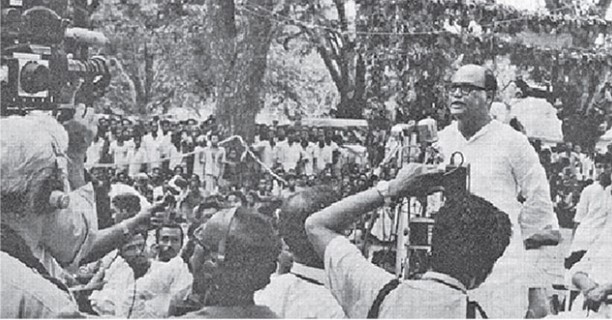
The emergence of the Bangladesh government in Mujibnagar, fifty-five years ago on 17 April 1971 was a defining moment for the Bengali nation. The first Bengali government in history, administered by Bengalis and for Bengalis, it took shape in the grey region between the sinister and the illuminating. The sinister was the programmed genocide launched with unprecedented viciousness by the Pakistan occupation army; and the illuminating was the truth that such a brutal assault on human dignity, indeed on the traditions of a people, could not go unchallenged and unbeaten. And so it was on 17 April 1971 that in Meherpur of Chuadanga, the senior leaders of the Awami League, close associates of Bangabandhu Sheikh Mujibur Rahman, came together to proclaim before the world that out of the fire and fury of a fast-enveloping war had emerged a government, the overriding purpose behind the act being the liberation of the land.
Syed Nazrul Islam, Tajuddin Ahmad, M. Mansoor Ali and A.H.M Quamruzzaman informed their fellow Bengalis and then the world that occupied Bangladesh was ready for a guerrilla struggle against Pakistan. It did not matter that Bangabandhu Sheikh Mujibur Rahman had been spirited away to prison somewhere in Pakistan. But it did matter that he was the symbol of the struggle about to be unleashed by a nation brutalised by savagery. Long hours had been spent working out the details of the announcement of the government, its line-up and its objectives. Amir-ul Islam, the eminent lawyer, had worked on the draft proclamation that would be read out on the occasion. And Yusuf Ali, teacher-turned-politician, was there to do the job. He would do it with finesse. Journalists from the global media had been told of the event and on the day would make sure they were there to take in the measure of Bengali resistance to Pakistan.
The moment was a first for Bengalis in their thousand-year history. Of course, Siraj ud-Daulah, the last independent nawab of Bengal, had perished in 1757, waging war against the British and their local cohorts in defence of a lost cause. But here was Bengal, or the eastern part of a whole truncated already through the grim turn of events in 1947, ready to rise in defence of its self-esteem. There was a qualitative difference between Siraj ud-Daulah and the men about to transform themselves into a government in April 1971. It was simple: the political structure which Tajuddin Ahmad and his associates hurriedly cobbled into shape would be the first Bengali government in history. Never before had Bengalis governed themselves. Now, caught between a rock and a hard place, the government that would come to be known as Mujibnagar had chosen to strike back.
Much good and many unprecedented events flowed from 17 April 1971. The essence of it all was the creation of a sense of purpose among the Bengali nation. Students, academics, doctors, lawyers, artistes, politicians, civil servants, journalists, diplomats, soldiers, policemen, EPR personnel — all rallied to the cause… because the Mujibnagar government was there. Thousands of young men simply marched from their villages and their towns and then trekked through woodlands and swam across streams and rivers to link up with Mujibnagar. What had till 25 March been the improbable turned out to be the eminently possible. Songs of revolution that Bengalis had never heard before became part of their existence through Shwadhin Bangla Betar. Bengali officers of the Pakistan army, now no more with it and very much a moving force behind the resistance, forged a guerrilla force named the Mukti Bahini and unleashed it on the marauding men from the mountains of the distant west.
What if the Mujibnagar government had not taken shape? What if the men who would lead the armed struggle against Pakistan had chosen to spend the rest of their lives waiting for a negotiated settlement to the crisis? What if, in the absence of resistance, Pakistan had perpetuated its presence in Bangladesh and cast its ever-darkening shadow on Bengali heritage? Prior to 17 April 1971, these fears were all too real for the nation to dismiss out of hand. Bangabandhu had been arrested by the Pakistan army; and not one of us knew where the rest of the Awami League leadership was at that point. We would, of course, know subsequently that even as we worried about the future, Tajuddin Ahmad and Amir-ul Islam were making frantic efforts to locate the other men who would form the core of the Mujibnagar government. Over a period of nearly a month, Syed Nazrul Islam, Mansoor Ali, Quamruzzaman, M.A.G. Osmany and a host of others would link up with Tajuddin Ahmad. The moment that would make history would be at hand.
It is that lighting of the candle in the dark we celebrate this morning. The men who built the edifice of Bengali resistance little knew before 25 March 1971 of the huge ordeal that lay ahead of them. They were men whose belief in constitutional politics had been total and unequivocal. And yet these were the men on whose shoulders devolved the responsibility of guiding a bewildered, frightened nation to freedom through an armed struggle. They did the job marvellously well. They shaped a revolution that would put into global political orbit the first sovereign Bengali republic in history.
And we are better off today, as a proud and sovereign Bengali nation, because of the great cause that the Mujibnagar men upheld, with fortitude and foresight, in our year of unimaginable tragedy followed by untrammelled triumph.
Syed Badrul Ahsan writes on politics, diplomacy and history